In today’s classrooms, one of the biggest challenges educators face isn’t the curriculum—it’s engagement. Students are often passive participants in their own learning journey, either overwhelmed or left behind by the pace of instruction. But what if we told you that a small, wireless device—called aclicker—could revolutionize the way students learn, respond, and interact in real time?
Welcome to the future of education. Welcome toclickers for classrooms.
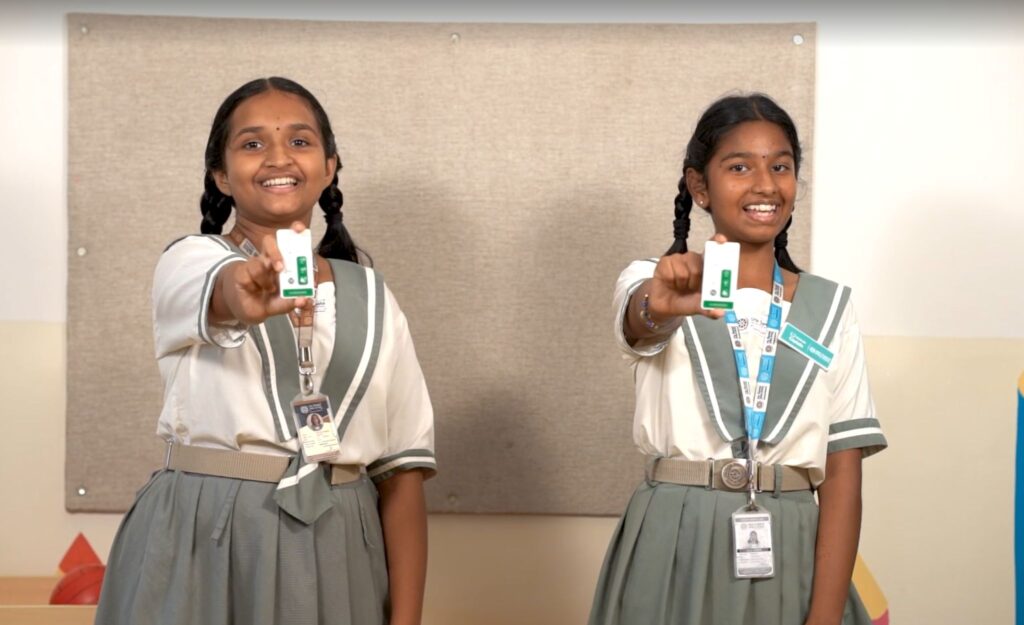
The Engagement Crisis in Classrooms
Whether it's a bustling school in Delhi or a remote school in Bihar, one thing remains true:not every child gets a voicein the classroom. Teachers often rely on hand-raising, verbal answers, or post-class assessments to gauge understanding. Unfortunately, these methods are limited, time-consuming, and frequently biased toward only the most confident students.
Studies show thatstudent engagement drops by 40%between Grade 5 and Grade 10. [Source: ASER Annual Status of Education Report]. This disengagement leads to poor learning outcomes, lack of participation, and a growing gap between curriculum goals and actual understanding.
So how do we address this?
Enter: Clickers for Classrooms
Clickersare handheld wireless devices that allow students torespond instantlyto questions posed by the teacher. With a simple click, responses are recorded, analyzed, and displayed—all in real time. No internet, no devices, no disruption.
Clickers have been widely used in the West for over a decade, especially in university lecture halls. But thanks to innovations likeClass Saathi, they’ve been adapted forK–12 classrooms, including those in low-resource settings.
And the impact? Game-changing.
From Passive Listeners to Active Participants
Clickerstransform the classroom dynamic. Instead of being silent spectators, every student becomes a participant.
- A student who never raises their hand suddenly has a safe, judgment-free way to respond.
- Teachers no longer have to guess who’s learning and who’s lost.
- Every lesson becomes interactive—with immediate feedback.
With clickers, a single classroom can achieve100% participation in under 3 seconds.
That’s not just engagement. That’s empowerment.
Backed by Research
The pedagogical power of clickers isn’t just anecdotal—it’s backed by research.
A study published in the journalActive Learning in Higher Educationfound that classrooms using clickers reported:
- Higher attendance
- Improved conceptual understanding
- Better exam performance
Another report byHarvard Universityshowed thatreal-time feedback tools like clickerssignificantly increase knowledge retention and class attentiveness.
In India, schools usingClass Saathireported a40% reduction in time spent on assessments, with students showing measurable improvements in performance over a three-month period.
Real-Time Data. Real-Time Teaching.
One of the most powerful aspects of clickers for classrooms is theinstant feedback loopthey create.
Instead of waiting until the end of the unit or term to assess understanding, teachers can:
- Spot misconceptionsin the moment
- Adapt their teaching based on live data
- Support differentiated learning without extra prep
And school leaders? They gain access toAI-powered dashboardsthat show classroom engagement, student progress, and learning gaps—right down to the chapter level.
This isdata-driven teachingmade simple and scalable.
Clickers That Don’t Need the Internet?
Yes, you read that right.
Solutions likeClass Saathihave solved the biggest EdTech barrier in India—connectivity. Unlike tablets or smartboards, Class Saathi clickers:
- Work without internet
- Don’t require electricity
- Are cost-effective
- Support multiple languages (Hindi, Bengali, Kannada, etc.)
This makes them ideal forboth urban private schools and rural government schools—ensuringno child is left behind.
Replacing Traditional Assessment
Let’s be honest—traditional assessments are slow, stressful, and often inequitable.
Clickers allow forfrequent, low-stakes assessmentthat:
- Feels like a quiz, not an exam
- Encourages honest participation
- Builds students’ confidence over time
It shifts the focus from grades togrowth—exactly what NEP 2020 envisions.
Emotional Benefits for Students
What we often overlook in the assessment debate isstudent well-being. Clickers reduce the anxiety associated with:
- Speaking in front of peers
- Fear of giving a wrong answer
- Being judged or singled out
With clickers,every student’s answer counts, and no one knows who got it wrong. That’s emotional safety—and a pathway to deeper learning.
Why School Leaders Should Care
For school owners and principals,clickers offer an immediate ROI:
- Save teacher time (up to 40%)
- Improve student outcomes
- Get measurable learning data
- Strengthen your school’s reputation for innovation
Most importantly, they help schools comply with theNEP 2020 mandate for formative, competency-based assessments.
Not Just a Tool—A Mindset Shift
Clickers are not just gadgets. They are aphilosophical shifttoward student-centric, inclusive, and responsive learning.
They say smartboards made the classroom look smart.
Clickers? They makestudents smarter.
Final Thoughts: The Future Is Clickable
In a world where attention spans are shrinking and classroom diversity is growing,clickers for classroomsoffer a simple yet revolutionary answer:every voice matters.
Whether you're a policymaker, principal, or passionate teacher—the future of education isn't silent.
It's clickable.
Want to See Clickers in Action?
Class Saathi by TagHiveis trusted by10,000+ classroomsacross India and beyond.
Want to bring this transformation to your school?