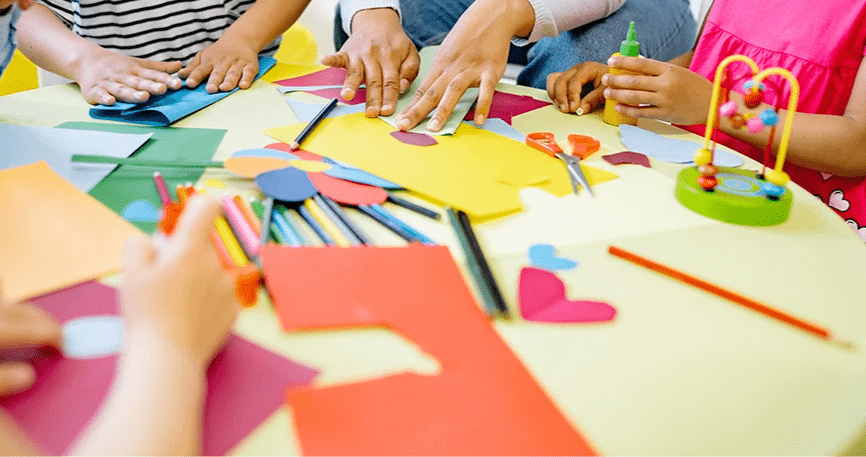
For kids, true learning can never happen by simply sitting quietly and absorbing information.
They touch things. Ask questions. Repeat actions. Try again. And again.
That’s exactly what the concept of interactive learning looks like! Instead of just listening, children get involved. They explore, respond, and figure things out in their own way. And honestly, that’s what makes learning stick.
What Is Interactive Learning in Early Childhood?
Interactive learning means learning by doing things actively. It’s about active participation rather than passive listening.
It can look like:
- Playing with blocks
- Asking questions during a story
- Acting something out
- Helping with small daily tasks
Here, kids learn by doing, through play, conversations, movement, and hands-on experiences.
Interactive learning is the most beneficial for young kids because at this stage of their lives, they don’t learn through lectures.
They learn through experiences. The more involved they are, the better they understand and remember things.
What Are the Benefits of Interactive Learning for Young Kids? Why Does It Work So Well?
Interactive learning brings a great impact to young minds. It not only helps them academically but also in everyday life through changed behaviour.
1. Behaviour Management
When kids take part in group activities or games, they slowly pick up habits like waiting for their turn, listening to their peers, and following simple instructions.
It does not happen overnight. But over time, they begin to regulate themselves better in everyday situations.
2. Language & Communication Skills Improvement
Interactive learning activities like conversations, stories, and pretend play can naturally build language.
Kids hear new words, they try to repeat those words in daily conversations, and even learn to use them in their own way. That’s how confidence in speaking grows, without pressure.
3. Early Maths & Problem-Solving Skills
When kids solve puzzles, count their toys, and sort shapes, they learn to think logically.
While this may seem small, these activities slowly help them notice patterns, spot the differences, and make simple connections.
All of which come together to form the base of problem-solving.
4. Emotional Understanding Development
Playing with other children means not always having things go their way. And that’s actually a good thing.
They learn what frustration feels like. They also learn sharing, empathy, and cooperation. This emotional development cannot be taught but experienced, which is what happens here.
5. Creativity & Imagination
Give a child some space, and they will come up with something.
Pretend play, drawing, storytelling, these activities help them think freely and come up with their own ideas.
6. Thinking & Expression Improvement
Interactive learning activities for kids push them to think and talk at the same time.
They are not just understanding things in their head. They are trying to explain them too. This strengthens their thinking and communication.
7. Better Memory & Attention
When children are actively involved, they remember more.
Activities like songs, instructions, and games help improve their focus and recall without making it feel like “learning”.
8. Keeps Children Engaged & Interested for Long
Kids naturally learn better when they are involved in an activity rather than simply listening.
What Does Interactive Learning Look Like in Preschools?
A good preschool can change the way a child learns. It can add structure to their daily routine without making it look like a chore.
But you need to choose a preschool that blends structured teaching with play-based and interactive learning.
Here’s what interactive learning looks like in preschools:
1. Play-Based Learning
Play-based learning for preschoolers is where most of the learning happens.
Building, pretend play, and simple games are where kids pick up concepts without even realising they are learning something new.
2. Storytelling & Role Play
Stories are powerful. But when children act them out, they understand them better.
It connects language, imagination, and real-life situations all at once.
3. Hands-On & Sensory Activities
Touching, feeling, and exploring are some experiences that help children make sense of things.
Kids can understand something better when they interact with it, not just hear about it.
4. Music, Rhymes, & Movement
Most kids love activities that allow them to move their limbs.
It keeps them active while also improving listening, coordination, and memory.
5. Digital Learning Tools
Some preschools use digital tools to make learning more visual. When used carefully, these tools can make concepts easier to understand and more engaging.
6. Group Learning & Peer Interaction
Being around peers changes everything.
Children observe, copy, interact, and learn from each other. It builds both confidence and communication skills.
What Can You Do At Home? Tips for Parents to Encourage Interactive Learning
In addition to preschools, you can encourage interactive learning at home. And you don’t even need special tools or structured plans.
1. Talk & Ask Questions
Instead of just telling your child what to do, ask simple questions.
“What do you see?”
“What do you think will happen?”
This gets them thinking and responding.
2. Turn Daily Activities into Learning Moments
Turn simple tasks like cleaning, cooking, and grocery shopping into opportunities.
Ask them to count, identify colours, or name objects. It feels like play, but it builds understanding.
3. Let Playtime Do Its Job
Children already love playing.
You just need to give them the right kind of play! Blocks, pretend games, and simple activities make learning more fun and natural.
4. Make Storytime a Two-Way Conversation
Pause while reading.
Ask questions. Let them guess what happens next. It keeps them involved instead of just listening passively.
5. Encourage Hands-On Exploration
Let children explore textures, shapes, and objects through activities like drawing, clay play, or puzzles.
It helps them think and solve things on their own.
6. Limit Passive Screen Time
Not all screen time is bad.
Yes, passive watching may not help your child that much. Instead, you choose interactive content where the child has to respond to the screen.
7. Follow What Your Child Already Likes
Children learn faster when they are interested.
If they like animals, use that. If they like cars, use that. It makes learning feel natural.
Conclusion
Interactive learning is not a method you “apply”. It is something children naturally respond to.
When they are involved, they learn better.
When they explore, they understand more.
When they enjoy the process, they remember it.
And that’s really the goal!
Guest Author Bio:
Chitra Khanna is the Content Strategist at KLAY Preschools & Daycare, where she leads content creation focused on early childhood education and parenting. With a background in digital marketing and a passion for empowering families, Chitra develops resources that engage and inform parents, helping them navigate the critical stages of their children's development. Her creative approach and deep understanding of educational trends ensure that her content is both relevant and impactful. Outside of work, Chitra enjoys exploring new learning methodologies and contributing to discussions on child welfare and growth.
