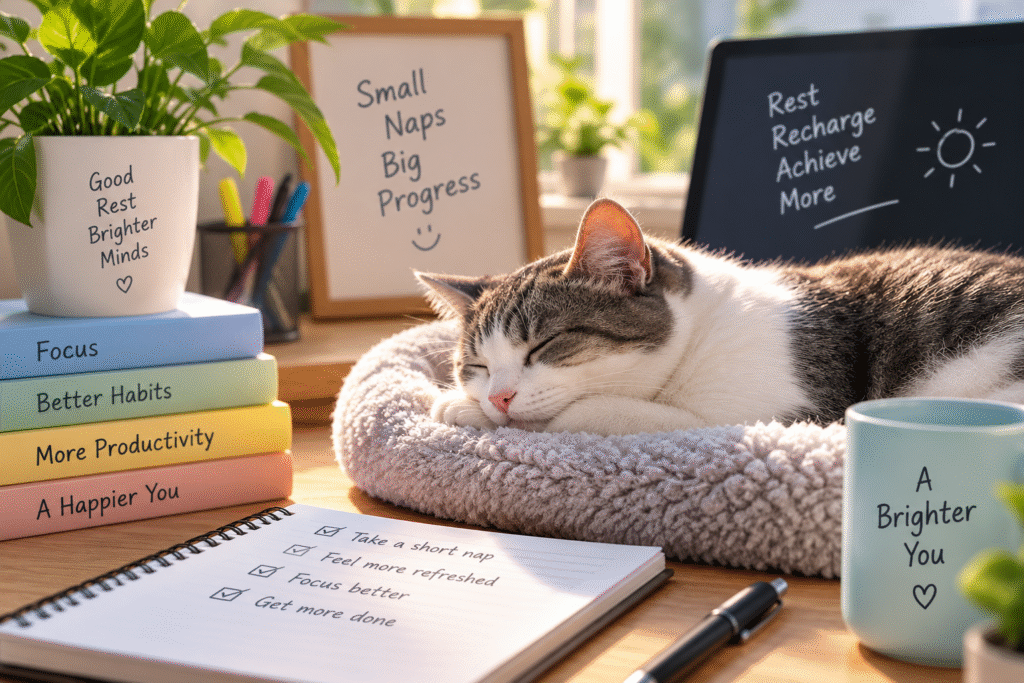
It might not be possible for all of us to get a continuous 8–9 hours of sleep every day. A lot of times even if we do manage to get that sleep, we do not feel that refreshed in the morning. A quick power nap can help you overcome this energy downfall and rejuvenate you for the day ahead.
Research shows that an afternoon nap can help you feel more rested and alert. Longer naps can also help in improving your memory and cognition. So, for example, if you are thinking of really stretching your day just before exams, that might not be useful for you. When you feel really tired and drowsy during the afternoon, taking a short nap might benefit you more.
Remember feeling cranky due to lack of sleep and having a lot of tasks at hand? A quick power nap does a better job in this situation rather than having coffee. Having coffee or anything that can instantly boost your energy might actually worsen your mood. So don’t hesitate to invest those 10–20 minutes at least in order to feel better.
For most people, the duration of 10–20 minutes works the best, typically known as the power nap. The reasoning lies in the sleep cycle. The more you increase the duration the worse you will feel after waking up from the nap. This is because they may wake up from a deeper stage of sleep, which occurs later in the cycle, and feel fuzzy-headed.
For a lot of people falling asleep doesn’t happen in the flip of a moment. It might take up to 14 minutes or even more to actually fall asleep. So don’t worry about it.
The quality of sleep or nap also depends on how comfortable you are in the sleeping position. So, it matters where you are sleeping and what your body posture is while sleeping.
FAQ: Power Napping
A1: A power nap is a short nap, usually lasting 10 to 20 minutes, designed to boost alertness, mood, and cognitive performance without causing grogginess.
A2: Power napping offers various benefits, including increased alertness, improved mood, enhanced concentration, and a quick energy boost, making it a valuable strategy for increased productivity.
A3: The ideal time for a power nap is during the afternoon, typically between 2 p.m. and 4 p.m., when many people experience a natural dip in alertness and energy.
A4: To maximize the benefits of a power nap, find a quiet, dark, and comfortable space, set an alarm to ensure it doesn't exceed 20 minutes, and relax your body and mind as much as possible.
A5: Power napping is generally safe and beneficial, but taking longer naps can lead to grogginess, disrupt night time sleep, or indicate underlying sleep issues.
A6: No, power napping cannot replace a full night's sleep. While it can improve alertness, it's not a substitute for the restorative benefits of a complete sleep cycle.
A7: Employers and schools can create designated nap areas, promote a culture of taking short breaks, and educate individuals on the benefits of power napping for enhanced productivity and well-being.
A8: To incorporate power napping, schedule it during your daily afternoon slump, be consistent with the duration, and avoid caffeine or heavy meals before napping.
Power napping is a valuable tool for improving productivity, focus, and overall well-being, especially during the mid-afternoon energy dip. When done correctly, it can offer a quick and effective energy boost without interfering with night-time sleep.
