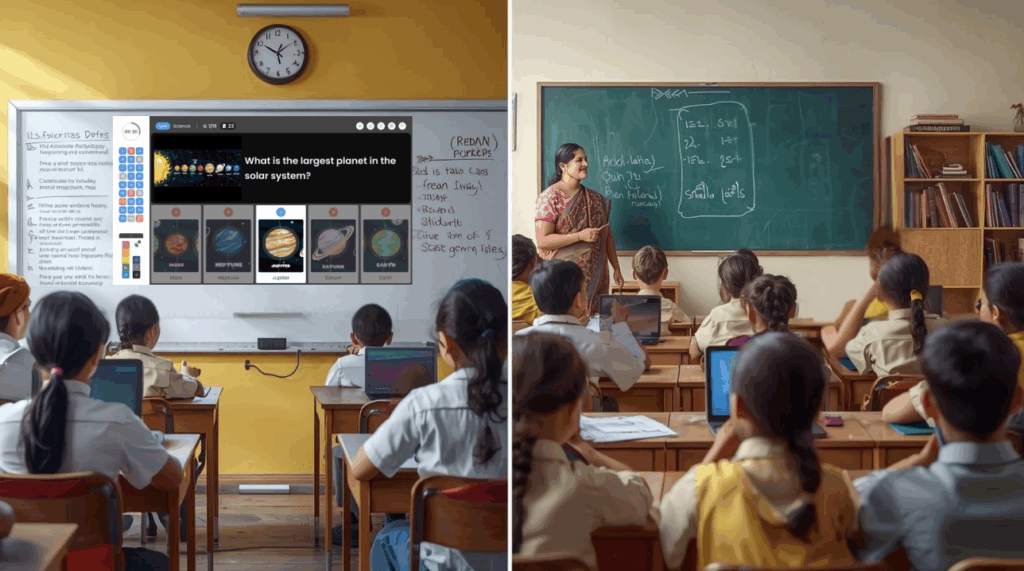
The figures speak for themselves.
According to a recent report by the Ministry of Education, only57% of Indian schools have computersand just53% have internet access.
This is the uncomfortable truth we don’t talk about enough.
For years, the education sector has been sold the dream of“digital classrooms”and“smart learning.”But how “smart” is a solution if it doesn’t even work in most Indian classrooms?
The Digital Illusion
Glossy ads and policy announcements often showcase tech-driven classrooms filled with screens and tablets. But reality paints a different picture—thousands of schools across India lack even the basic digital infrastructure to support these solutions.
In fact, for the majority of rural and semi-urban schools, “digital learning” remains more aspiration than reality. And this widening digital divide risks leaving millions of children behind.
Flipping the Script with Class Saathi
This is whereClass Saathisteps in by reimagining what EdTech should look like in India. Instead of waiting for every classroom to be connected, Class Saathi ensures learning happenstoday, not in some distant, tech-ready future.
- No internet or electricity required– because learning shouldn’t stop when the WiFi drops.
- Simple Bluetooth clickers– low-cost, durable, and student-friendly.
- Real-time insights for teachers– to identify learning gaps instantly.
- Curriculum aligned– to CBSE, ICSE, and 20+ state boards.
It’s proof thattechnology should adapt to classrooms, not the other way around.
If we want education reform to truly succeed, we need to start with inclusion and accessibility, not just aspiration. Class Saathi shows us that meaningful innovation doesn’t always require high-end gadgets—but smart design that works in the classrooms we actually have.
What do you think is the biggest barrier stopping Indian classrooms from becoming inclusive and future-ready?