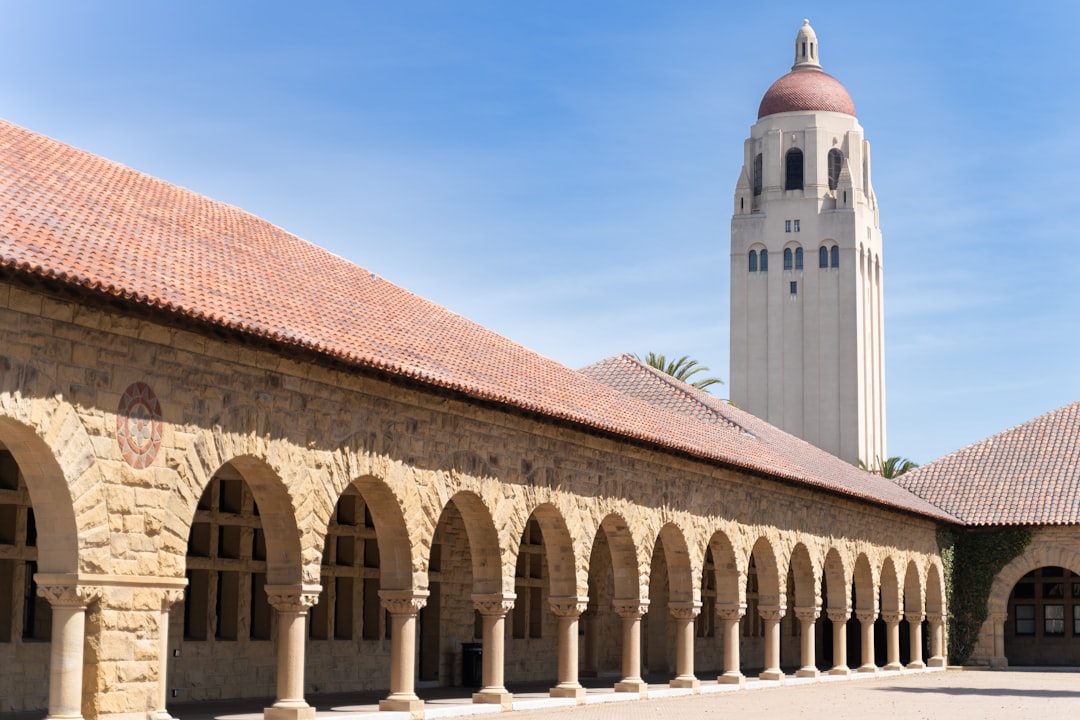
Summary: Carina Hong, a 24-year-old former Stanford student with an impressive academic background from MIT and Oxford, is making waves in the AI world. She founded Axiom Math, a startup focused on building AI systems capable of advanced mathematical reasoning. By attracting top researchers from Meta and DeepMind, Hong is aiming to push the boundaries of AI research beyond traditional paths, with ambitions that extend into hardware verification, finance, and cryptography.
A Bright Academic Start: From MIT to Oxford
Carina Hong's journey into artificial intelligence began well before she decided to leave Stanford University. She studied mathematics and physics at the Massachusetts Institute of Technology (MIT), graduating with an outstanding GPA of 4.9 out of 5.0. Following this, she earned a Master of Science in Neuroscience at the University of Oxford. Her academic excellence earned her a prestigious Rhodes Scholarship, marking her as a promising researcher early on. Despite this, Hong chose to step away from formal academia to pursue startup building, driven by her belief that the future of AI lies in mathematical reasoning.
Launching Axiom Math: Tackling Advanced Mathematics with AI
In March, Hong founded Axiom Math, a company dedicated to creating AI systems capable of handling complex mathematics. Recently, the company announced it had solved two Erdős problems—longstanding challenges in the mathematics community—shortly after securing a $64 million seed funding round. Axiom has assembled a focused team of seventeen employees, many of whom transitioned from Meta's Fundamental Artificial Intelligence Research (FAIR) lab and GenAI team, as well as Google Brain, which merged with DeepMind in 2023.
Attracting Top Talent: Why Meta Researchers Joined Axiom
Hong shared with Business Insider that one key reason senior scientists from large tech firms joined Axiom was the ambitious nature of the problem they are tackling. The pursuit of mathematical superintelligence is seen as career-defining work. This appeal helped Hong recruit from groups known for deep research, including Meta's FAIR lab, which underwent layoffs in October and saw its chief scientist, Yann LeCun, leave to start his own company. These shifts opened opportunities for Axiom to bring in top AI talent.
The Early Team and Key Hires
Among the first to join was Shubho Sengupta, whom Hong met by chance in a coffee shop; he now serves as Axiom's Chief Technology Officer. Other notable researchers from Meta include Francois Charton, Aram Markosyan, and Hugh Leather. Hong also brought on her former professor, mathematician Ken Ono, blending academic expertise with industry experience. Despite starting modestly—with just a folding table and a borrowed couch—the company quickly attracted talent from both academia and industry, fostering a culture that values collaboration over hierarchy.
Building a Collaborative and Non-Hierarchical Culture
Hong emphasizes a flexible approach to age and experience, aiming to create an environment where ideas thrive regardless of hierarchy. This culture mirrors her academic background and supports innovation by encouraging open collaboration among team members.
Beyond Math: The Broader Vision of Axiom Math
While Axiom's immediate focus is on mathematical reasoning, Hong envisions broader applications. She told Business Insider that provably correct reasoning could impact hardware and software verification, quantitative finance, and cryptography. Her ambition is to build AI systems capable of supporting complex decision-making across diverse fields.
What Carina Hong's Journey Means for AI
Axiom Math is still young, but Hong's success in attracting senior researchers from leading AI labs highlights how bold ideas can influence talent movement in the industry. Her path—from MIT to Oxford, then stepping away from Stanford—reflects a belief that groundbreaking work often happens outside traditional routes. The big question now is whether Axiom's pursuit of mathematical intelligence will live up to its early promise.